An engineer by Profession. Best Emerging author of Kolkotta book carnival 24 and Golden book award for his book A SANGUINE TALE Unfolding The Life of a Project Engineer. My second book A New Dawn Adventure in the Golden years is a Amazon Best seller No #1.The short story story collection Whisper of Diverse tale and Behind the headlines , a thriller are my latest addition to my publications. A Symphony of Life , a collection of Poem is due to be released shortly .I co authored in a numbers of Anthologies
All rights reserved by the author Date: 26/09/2025
1. At the tea stall, Arun ordered sugarless tea. The vendor poured it with a grin, “Sir, it’s already sugarless, but if you pay extra— I can remove the bitterness too!”
2. Grandfather sneezed so loud that the pigeons flew off. The neighbor clapped from the balcony, “Bravo! Do it again!” Grandfather smiled, “Next time, I’ll charge tickets.”
Rajat Chandra Sarmah Instagram: @rajatchandrasarmah5 YouTube: @converse with a smile
All rights reserved by the author Date: 25/09/2025
The Philippines is often portrayed through its islands and beaches, but its deeper rhythm lies in tradition. In rural towns, the fiesta remains a cornerstone of community life. Villagers pool resources to cook, sing, and dance, not just for celebration but to affirm bonds. Each region carries its own flavor—from the Ati-Atihan festival in Kalibo to the vibrant Sinulog in Cebu.
Music and oral storytelling remain strong, bridging generations. Grandparents pass down folk tales of mythical beings like aswang and diwata, while young Filipinos blend them into modern art, theater, and even online comics.
Faith also weaves itself into daily life, not only through Catholic practices but also in pre-Hispanic rituals that survive in remote islands. Meanwhile, migrant families returning from abroad bring fresh influences, blending tradition with global experiences.
Amid modernization, the Philippines shows that culture is not lost—it adapts, flows, and resurfaces, much like the tides that touch its shores.
Rajat Chandra Sarmah Instagram: @rajatchandrasarmah5 YouTube: @converse with a smile
All rights reserved by the author Date: 25/09/2025
1. I asked my cat, “Any advice for the day?” She yawned and turned the other way. Lesson learned—don’t chase every call, Some mornings need no rush at all.
2. A man carried an umbrella on a sunny street, When rain came, he looked so neat. But when the sun shone brighter still, He sold the umbrella for an ice cream chill!
Rajat Chandra Sarmah Instagram: @rajatchandrasarmah5 YouTube: @converse with a smile
All rights reserved by the author Date: 24/09/2025
Evenings arrive like a soft reminder that life is not all about running. After hours of rushing, planning, and filling lists, dusk brings the pause we forget to take. In many parts of the world, it is the hour of tea, prayer, or family walks. Across cultures, evenings quietly teach the same lesson: balance.
The sun sets with no regret for what was left undone. Birds return to their nests without concern for tomorrow’s storms. People gather—sometimes at crowded markets, sometimes on empty terraces—finding peace in togetherness or in solitude.
Global rhythms may differ, but the mood of twilight is universal. Whether in Tokyo, Lagos, or Buenos Aires, the dimming light urges us to breathe, reflect, and let the heart settle. Perhaps this is why stories, songs, and shared meals belong so naturally to evenings. They remind us that life is more than work—it is connection, rest, and renewal.
Rajat Chandra Sarmah Instagram: @rajatchandrasarmah5 YouTube: @converse with a smile
All rights reserved by the author Date: 24/09/2025
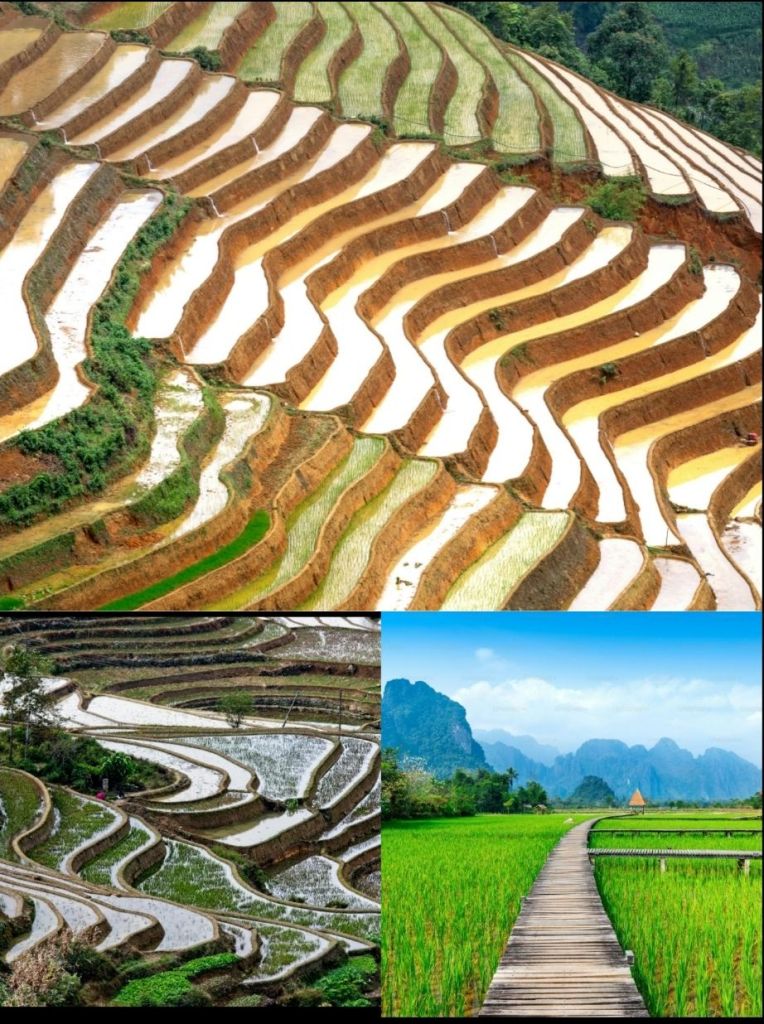
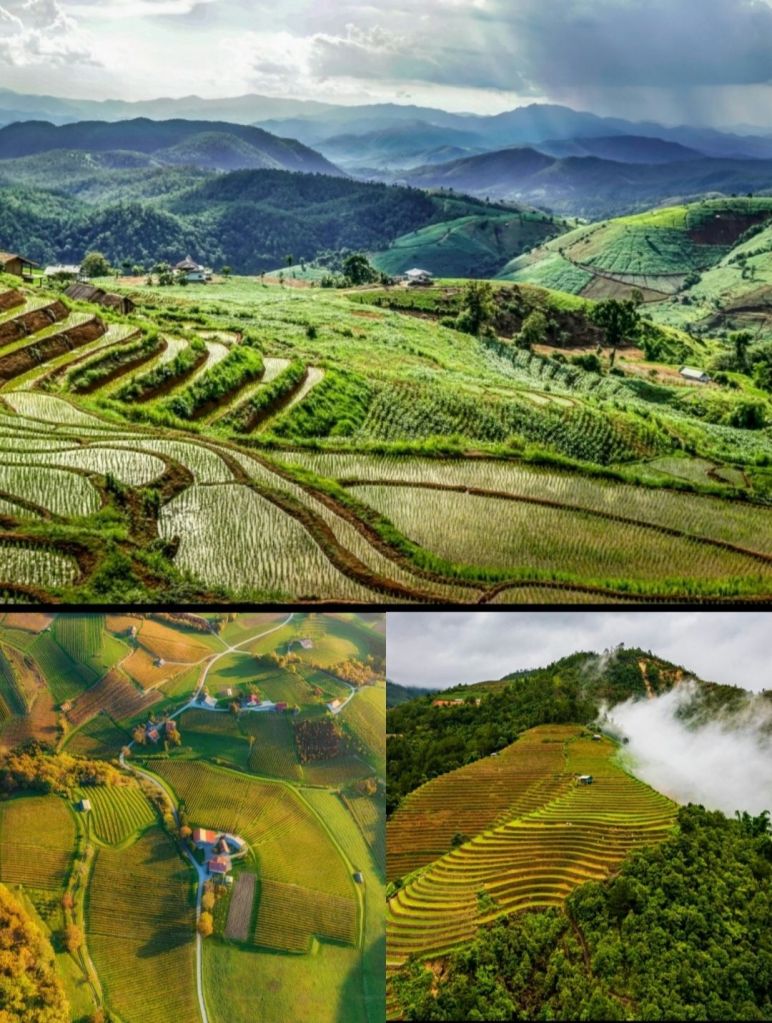
Thailand, often recognized for its bustling cities and golden temples, is also a nation deeply rooted in agriculture. Rice remains its most iconic crop, making the country one of the world’s top exporters. Yet, behind the green fields, a quiet transformation is underway. Farmers are no longer relying only on rice; diversification has become the call of the hour.
Fruit cultivation—especially mangoes, durians, and pineapples—has gained prominence. Thailand has also invested heavily in rubber plantations, becoming a global leader in natural rubber exports. In coastal regions, shrimp farming has added another dimension to rural livelihoods.
What sets Thailand apart is its early adoption of technology in farming. Mobile applications now assist smallholders with weather forecasts, pest control tips, and real-time market prices. Young farmers are blending traditional know-how with digital tools, reshaping the rural landscape.
The challenges of climate change, soil degradation, and fluctuating global demand persist. But Thailand demonstrates how a Southeast Asian country can preserve heritage while steadily modernizing its agricultural backbone.
Rajat Chandra Sarmah Instagram: @rajatchandrasarmah5 YouTube: @converse with a smile
All rights reserved by the author Date: 24/09/2025
Microfiction
1. Ravi stared at his old wristwatch, long stopped. “It doesn’t tick,” his friend teased. Ravi smiled, “It doesn’t need to— It only reminds me of the days When time was mine to waste.”
2. Meera planted a tiny sapling by the roadside. “Why here?” asked a passerby. “So someone’s shadow will fall On someone’s tired shoulders, Even if I am not here.”
Rajat Chandra Sarmah Instagram: @rajatchandrasarmah5 YouTube: @converse with a smile
All rights reserved by the author Date: 23/09/2025
No matter where we are in the world, people remain bound by the stories they share. A grandmother in Morocco telling a fable by lantern light, a young father in Canada reading bedtime tales, or a traveler recounting experiences to friends in a café—these moments connect humanity more deeply than technology alone.
Stories soften distances. They remind us that across oceans and languages, the same emotions ripple through hearts—hope, loss, love, and laughter. When we pause at the end of the day, choosing to listen or to tell, we find comfort not just in words, but in the presence of another voice. In a restless, global age, perhaps this simple exchange is still our greatest source of calm.
Rajat Chandra Sarmah Instagram: @rajatchandrasarmah5 YouTube: @converse with a smile
All rights reserved by the author Date: 23/09/2025
Across Southeast Asia, Vietnam is quietly transforming its countryside. For decades, rice paddies defined its agricultural image. But now, the nation is balancing tradition with diversification. Coffee, pepper, cashews, and aquaculture are rising as major contributors to rural income. In the central highlands, smallholder farmers are finding stability by shifting from mono-crop rice farming to mixed plantations that include fruits and spices.
What makes Vietnam’s progress noteworthy is the blend of local resilience and global adaptation. Farmers are embracing drip irrigation, organic inputs, and smart mobile-based advisories. Cooperative models, once fragile, are gaining ground with state support, connecting farmers directly to exporters.
The shift is not only economic but also social. Younger generations, once migrating to cities, are returning to family farms equipped with digital skills. This creates a fusion of old wisdom and new technology. Challenges remain—climate shifts, market volatility, and land fragmentation—but Vietnam is setting an example for how a Southeast Asian country can modernize agriculture while keeping its roots intact.
Rajat Chandra Sarmah Instagram: @rajatchandrasarmah5 YouTube: @converse with a smile
All rights reserved by the author Date: 23/09/2025
The sky breaks open with a silver thread, Soft winds drift where the silence is spread. Dew clings gently to the grass below, A calm reminder of the peace we know.
Birds call lightly, not loud, not fast, Moments like these are made to last. A cup of warmth rests in quiet hands, Dreams take shape like shifting sands.
No rush, no weight, just air and light, The world feels gentle, fresh, and right. Step by step, the day will start, But stillness first must fill the heart.
Rajat Chandra Sarmah Instagram: @rajatchandrasarmah5 YouTube: @converse with a smile
All rights reserved by the author Date: 22/09/2025
Across the world, we rise under different skies yet breathe the same air. A child’s laughter in Lagos, a mother’s prayer in Kyoto, a song in Rio—all carry the same rhythm of humanity. Borders are lines we draw, but emotions, dreams, and kindness know no walls.
In moments of quiet, it is clear: what we share far outweighs what divides. The world is not a collection of strangers, but one large family scattered across time zones. To recognize this is to live with empathy, to reach out, and to belong everywhere.
May this evening remind us—we are never alone in this vast, humming planet.
Rajat Chandra Sarmah Guwahati, Assam, India Instagram: @rajatchandrasarmah5 YouTube: Converse With A Smile