LOVE BEYOND THE SCREEN

 (Part -I)

Rina had never been one to believe in love at first sight, let alone love found on a screen. Yet here she was, staring at her phone, heart racing with every notification that popped up from Abir. They had met in the most unexpected of places—a virtual book club that had brought together readers from around the world. What had started as a casual discussion about a novel soon turned into something much deeper, as they found themselves exchanging thoughts on life, philosophy, and everything in between.

Abir lived in a different city, hundreds of miles away from Rina. He was a software engineer with a knack for poetry, a combination that intrigued Rina from the start. They began messaging each other every day, sharing their favourite books, songs, and even their secret dreams. It wasn’t long before their conversations moved from the book club’s platform to private messages, then to long late-night calls that lasted until the early hours of the morning.

For Rina, these conversations were a breath of fresh air. She had always been somewhat reserved, preferring the company of her books to the noise of social gatherings. But with Abir, she felt a connection that was hard to explain. It was as if he could see through her, understanding her in ways that no one else had. The miles between them seemed insignificant when they were engrossed in one of their deep discussions, their voices filling the empty spaces of their respective rooms.

As the weeks turned into months, Rina found herself thinking about Abir more and more. She wondered what it would be like to see him in person, to feel the warmth of his presence beside her. The idea both excited and terrified her. What if the connection they had forged online didn’t translate into the real world? What if the magic disappeared when they were face-to-face? 

But despite her fears, the desire to meet him grew stronger. They had shared so much, from their deepest fears to their wildest dreams, that it felt almost inevitable. One evening, as they were talking about their plans for the weekend, Abir casually suggested, “Why don’t you come visit me? I’d love to show you around my city. It’s beautiful this time of year.”

Rina’s heart skipped a beat. She hadn’t expected him to bring it up so soon, but the thought of seeing him in person sent a thrill through her. After a brief pause, she replied, “I’d love that, Abir. Let’s do it.” (TO BE CONTINUED)

Rajat Chandra Sarmah 

04/09/2024

Guwahati , Assam India

Email:  rajatchandrasarmah@gmail.com

Instagram : @rajatchandrasarmah5

My new novel , a Fiction thriller was published . Very happy as it is my first try in novel

A forgotten melody( part -III)

Continued From Part -II

With the melody complete, Arun felt a sense of closure—not just for his grandfather, but for himself as well. He realised that he no longer wanted to return to his old life of monotony. Music had rekindled a fire within him, and he was determined to keep it alive.

Arun decided to stay in Chandanpur and open a small music school in his grandfather’s memory. He wanted to share the joy of music with others, to help them find the connection that he had rediscovered. The school quickly became a hub of creativity, attracting students from all walks of life.

As the years passed, Arun’s music school grew, and so did his reputation as a musician. But more importantly, he found a sense of fulfilment that he had never experienced before. He had found his true calling, and in doing so, he had found himself.

The story of Arun’s journey spread far and wide, inspiring others to rediscover their passions and reconnect with their roots. The completed melody, “The Melody of Life,” became a symbol of hope and healing—a reminder that it’s never too late to find your true path.

Arun’s story touched the hearts of many, both in India and around the world. It resonated with those who had lost their way, reminding them of the importance of following their passions and staying true to themselves. The blend of Indian classical music and universal themes of love, loss, and self-discovery made the story relatable to readers everywhere.

And as Arun played the final notes of “The Melody of Life” on stage one evening, he felt the presence of his grandfather beside him, smiling with pride.(End)

Rajat chandra Sarmmah

Guwahati , Assam , India

26/08/2024

Mail ID: rajatchandrasarmah@gmail.com

Instagram : @rajatchandrasarmah5
The forgotten melody(Part -II)

The next day, Arun visited the local music school, where his grandfather had once taught. He met with his grandfather’s old friend and fellow musician, Pandit Sharma. When Arun mentioned the tape, Pandit Sharma’s eyes lit up with recognition.

“Ah, ‘The Melody of Life,'” he said with a smile. “Your grandfather was working on that composition for years. It was meant to be a tribute to your grandmother, who passed away when your father was just a boy. But he never finished it. Something always held him back.”

Arun was intrigued. Why had his grandfather never completed the piece? What had held him back? Pandit Sharma suggested that Arun explore his grandfather’s old notes and compositions, which were still stored in the music school’s archive.

As Arun delved into his grandfather’s work, he began to piece together the story of his grandparents’ love—a love that had been both beautiful and tragic. His grandmother, Meera, had been the muse for many of his grandfather’s compositions, but her sudden death had left a void that even music couldn’t fill. The unfinished melody was Raghav’s attempt to capture the essence of their love, but he had never been able to bring himself to complete it.

Arun’s days in Chandanpur became a blend of the present and the past. By day, he explored his grandfather’s notes, trying to understand the man behind the music. By night, he listened to the haunting melody on repeat, letting it seep into his soul.

The more he immersed himself in his grandfather’s world, the more Arun began to question his own life. He realized that he had been living on autopilot, disconnected from his passions and from the people who mattered most to him. The melody became a mirror, reflecting his own unspoken desires and fears.

One evening, as Arun sat by the riverbank with the cassette player, he felt a sudden urge to play the sitar again. He hadn’t touched the instrument in years, but the pull was irresistible. Back at the house, he dusted off his grandfather’s sitar and began to play, hesitantly at first, then with growing confidence. The notes came to him naturally, as if they had been waiting all along.

As Arun played, he felt a sense of peace that had eluded him for years. The music flowed from him effortlessly, filling the house with a warmth that he hadn’t felt in a long time. In that moment, Arun knew that he had found what he had been missing.

The next morning, Arun visited Pandit Sharma again and shared his thoughts. “I think I know how to finish the melody,” he said. Pandit Sharma nodded, recognizing the determination in Arun’s eyes.

Over the next few days, Arun immersed himself in the music, working tirelessly to complete his grandfather’s unfinished composition. He drew on everything he had learned—from his grandfather’s notes, from the haunting tape, and from his own heart. Slowly but surely, the melody began to take shape.

The final piece was a blend of Raghav’s original composition and Arun’s own interpretation. It was both a tribute to his grandparents and a reflection of his own journey. When Arun played the completed melody for Pandit Sharma, the old man’s eyes filled with tears.

“Your grandfather would be proud,” he said softly.( To be continued)

Rajat chandra Sarmah

21/08/24

Guwahati , Assam , India

Mail ID : rajatchandrasarmah@gmail.com

Instagram :@ rajatchandrasarmah5

The Forgotten Melody

Arun Mehta, a 30-year-old software engineer, lived in a world of screens, codes, and conference calls. His days were a blur of deadlines and deliverables, with little room for anything else. From his cubicle in the high-rise office building to his one-bedroom apartment, life had become a well-oiled machine, efficient but devoid of any true joy. Even weekends, once filled with spontaneous outings and laughter with friends, had turned into extensions of his workweek, with meetings squeezed in between grocery runs and laundry.

But beneath the surface, something gnawed at him. A sense of emptiness that he couldn’t quite put into words. It wasn’t that he was unhappy, per se, but rather that he felt disconnected—from himself, from others, from life.

One Friday evening, as he returned from yet another exhausting day, a call from his mother interrupted his thoughts. She asked him to visit their old family home in the small town of Chandanpur Arun’s grandfather had passed away five years ago, and since then, the house had been left untouched. Arun hesitated but eventually agreed, feeling a strange pull towards his ancestral home.

Chandanpur was a far cry from the urban jungle Arun was used to. The air was cleaner, the pace slower, and the sounds of honking cars were replaced by the chirping of birds. As he stepped into the old house, memories of his childhood flooded back. The smell of incense, the creaking wooden floors, and the sight of his grandfather’s sitar resting in the corner of the living room brought back images of lazy afternoons spent listening to classical music.

Arun’s grandfather, Raghav Mehta, had been a renowned classical musician. A man of deep passion, Raghav had dedicated his life to music. He often said that music was the language of the soul, a bridge between the mundane and the divine. Arun had spent countless hours sitting by his side, mesmerised by the intricate melodies his grandfather played. But as Arun grew older, life took over, and the music faded into the background.

As Arun rummaged through his grandfather’s belongings, he stumbled upon a dusty old cassette tape tucked away in a drawer. It was labelled, “The Melody of Life.” Arun’s curiosity was piqued. He vaguely remembered his grandfather talking about this composition, but he had never heard it. Unable to resist, he searched for an old cassette player in the house and played the tape.

The music that flowed from the speakers was hauntingly beautiful. It was as if every note was infused with emotion, carrying with it the weight of a thousand unspoken words. Arun closed his eyes and let the melody wash over him. For the first time in years, he felt something stir deep within him—a connection to something greater, something beyond the routine of everyday life.

Rajat Chandra Sarmah

Guwahati , Assam , India

19/08/2024

Mail Id : rajatchandrasarmah@gmail.com

Instagram : rajatchandrasarmah5

What is SUCCESS ?( part -III)

Continued from part- II

Now let us discuss the 3rd assumption

 “A poor person suddenly got some money in the lottery and with his prudent decisions made him a billionaire. But he suddenly has no time for his family or about himself also.”

In this scenario presented,raises important questions about the true nature of success. If we use the definitions of success from the Oxford and Cambridge dictionaries—achieving a desired result or having a positive effect—the man who won the lottery and became a billionaire could certainly be considered successful in a material sense. He achieved wealth, which might have been a desired result.

However, the question arises: Is this success fulfilling? The man may have gained financial success, but at what cost? If he loses time for his family and personal well-being, he might not feel truly satisfied or happy despite his wealth. This situation suggests that success should be measured not just by material gains but by overall life satisfaction, including relationships, health, and personal fulfillment.

This analysis shows that success is multifaceted. Achieving wealth is one form, but if it comes at the expense of other important aspects of life, such as family connections and personal happiness, it may not be the holistic success that truly brings contentment. Success, therefore, may require balancing various life elements, ensuring that no single achievement overshadows the broader picture of a fulfilling life.

The scenario you’ve presented raises important questions about the true nature of success. If we use the definitions of success from the Oxford and Cambridge dictionaries—achieving a desired result or having a positive effect—the man who won the lottery and became a billionaire could certainly be considered successful in a material sense. He achieved wealth, which might have been a desired result.

However, the question arises: Is this success fulfilling? The man may have gained financial success, but at what cost? If he loses time for his family and personal well-being, he might not feel truly satisfied or happy despite his wealth. This situation suggests that success should be measured not just by material gains but by overall life satisfaction, including relationships, health, and personal fulfillment.

This analysis shows that success is multifaceted. Achieving wealth is one form, but if it comes at the expense of other important aspects of life, such as family connections and personal happiness, it may not be the holistic success that truly brings contentment. Success, therefore, may require balancing various life elements, ensuring that no single achievement overshadows the broader picture of a fulfilling life.

What about scenerio 4 th

“A middle class person always having shortages , but live happily with his family and spent lot of time with them though he could not fulfil all their requirements”

In the case , lets go for a detailed analysis-

Achievement and Intention -This individual might not have achieved all their material goals or fulfilled every requirement, but they have succeeded in maintaining a happy, loving family environment. If the goal was to have a close-knit family and to enjoy life despite financial constraints, then according to the Oxford definition, they have achieved what they set out to do.

Desired Results and Positive Outcomes: According to the Cambridge definition, success involves achieving positive results. This person has succeeded in creating a nurturing and happy family life, which can be seen as a significant positive outcome. Their success is not measured by material wealth but by the quality of their relationships and personal contentment.

Holistic View of Success: Hence from assumption of condition 3 and 4 Success is not solely about achieving material goals or fulfilling all requirements. It also encompasses personal satisfaction, quality of relationships, and emotional well-being. The middle-class person’s success is evident in their ability to maintain a loving family despite financial limitations.

Subjective Nature of Success: 

Success is subjective and can be defined differently by different individuals. For this person, success might mean family happiness and personal contentment rather than financial abundance. Their life exemplifies that success can be about achieving what is most meaningful to oneself, not just adhering to conventional measures of wealth and achievement.Balancing Goals and Fulfillment: The analysis suggests that achieving a balance between material aspirations and personal fulfillment is crucial. While financial stability is important, it is equally vital to nurture relationships and personal happiness, which can be a substantial measure of success. ( To be continued)

RAJAT CHANDRA SARMAH 

GUWAHATI , ASSAM INDIA

EMAIL: rajatchandrasarmah@gmail.com

Instragram : @ rajatchandrasarmah5

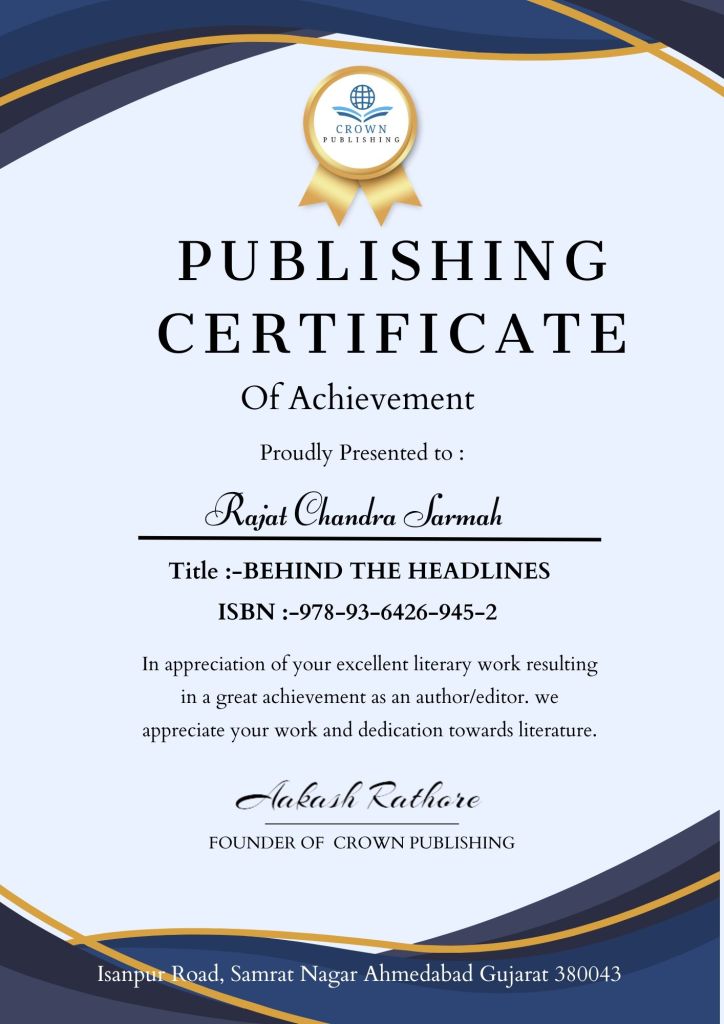
My first anthology ( Poetry) ultimately in my hand with a magnificent trophy from the publisher as recognition.

My First Anthology ( poetry) 120 amazing Poems by 10 Best Writers

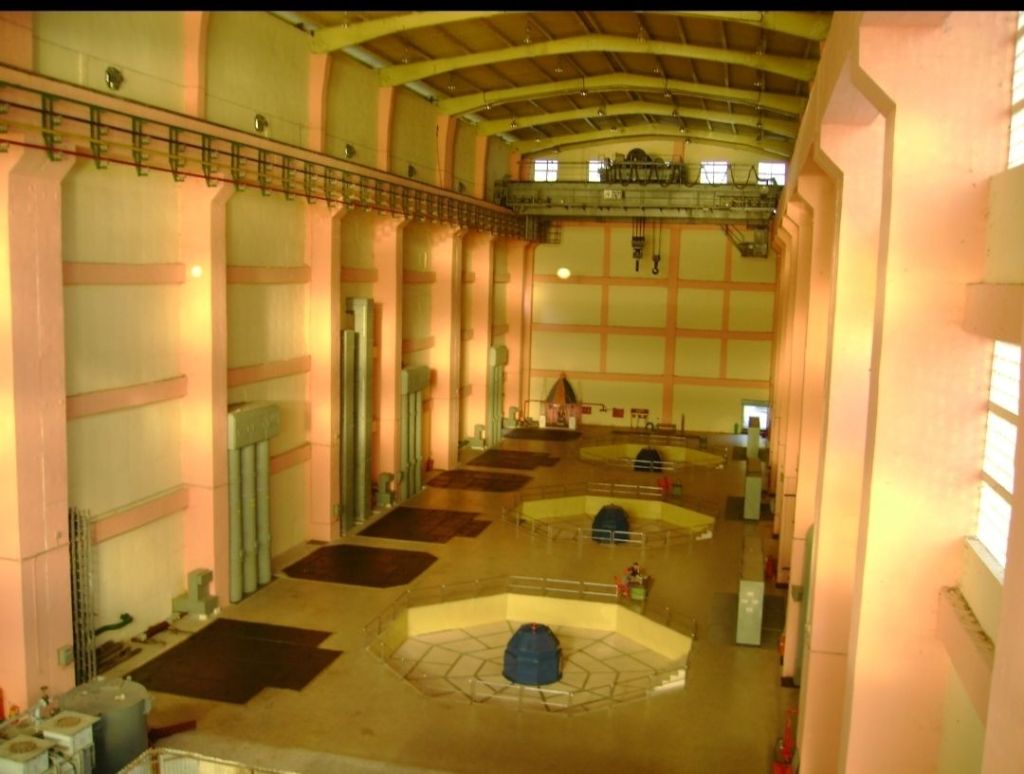
The Power House and Switchyard where I learned Engineering as construction in charge of EMG

What is SUCCESS ?( part -II)

Let us discuss the First situation i.e., assume a person desires to achieve something and is trying day and night ,even during his sleep he thinks about his dream, alternatively about his target. But unfortunately on the day of his crucial date , he under performed or he could not participate due to some genuine or critical reasons . In such a condition, whether we tell him that he has lost or unsuccessful or express our views differently.

The example of our great athlete Vinesh is the most recent example . She was giving her everything and reached the final of the olympic 50 kg wrestling . But she was disqualified for the final for hundred grams extra in her weight .

Till the semi final she was the winner – meaning she was successful . But in the final, she was disqualified for 100 grams of extra weight . The same girl who was qualified as per weight requirement till the semi final , failed in the test for the final and she was not allowed to show her talent 

So , as per dictionary meaning she was not successful . Is it so ?

The girl who was qualified till the semi final on weight count , could not pass the test for the final . Can we call her a failure? In one sense , yes because she could not keep her weight within limit . But I do not consider her a failure , because the girl who  maintained her weight till the semi final, accidentally failed by 100 grams on the final . 

This means , she has given her everything for the game , tried everything possible to reach the final , and in the end she could not play. If she played and lost things could have been differently analysed, but she could not play. 

Is it a luck factor , Will of God , treachery of someone , whatever may be the reason? She failed to reach her target , the Olympic Gold. So, she is unsuccessful .

But what do you say , when you see from the angle that she came for a very humble background , a girl from the conservative family of haryana and reached to the final of olympic .This itself is a great success but it is a bad luck or Will of God that she could not play the final . So success is not only reaching the ultimate goal but trying to achieve the desired goal. And balance is the Will of God or luck whatever we like to say .

So . What I want to say is that success is not the winning of the target but trying with all the might to achieve the target .

 Now discuss the second assumptions –

Suppose , in the field , someone wants to be the Olympic winner . With all his past performance shows that he has really no major threat. But in the final someone else went ahead of him.

Similar incidents happened several times in Olympic history itself . When one has the record of best performances outside the olympic and no one even comes near to him in performance , have failed miserably in olympics . Is it to be called unsuccessful?

I think , yes, because he has the capacity and opportunity , but failed to keep his own performance . Or is it just a bad day ? ( TO BE CONTINUED )

RAJAT CHANDRA SARMAH 

GUWAHATI , ASSAM INDIA

EMAIL: rajatchandrasarmah@gmail.com

Instragram : @ rajatchandrasarmah5

What is SUCCESS ?( part -I)

I referred to the Oxford dictionary and it says- Achieve something that you have been trying to do or get, to have the result or effect that was intended.

In Cambridge Dictionary Success means – The Achieving of the desired results or someone or something that achieves positive results .

Let’s start our discussion by asking some questions  based on the above two definitions from the Best of the English Dictionaries.

 First , assume a person desires to achieve something and day and night he was behind that even during his sleep he thought about his dream . Alternatively about his target. But unfortunately on the day of his crucial date , he under performed or he could not participate due to some genuine  critical reason . Is he lost or has he had success ?

Secondly -Suppose , in the field , someone wants to be the Olympic winner . with all his past performance shows that he has really no major threat. But in the final someone else went ahead of him.

 Third , a poor person suddenly got some money in the lottery and with his prudent decisions made him a billionaire. But he suddenly has no time for his family or about himself also. 

Fourth , a middle class person always having shortages , but live happily with his family and spent lot of time with them though he could not fulfil all their requirements

Fifth – A person is fully qualified for something say for a job , but someone else took the job from him through some illegal means 

Sixth – A person with honesty and dedication has contested an election with a rowdy , uneducated but rich person , and the honest competent person lost. Is it a success or failure?

Seventh -In the field , a leading runner saw one of his competitors fall down and he helped him to lift up . As a result he could not reach the target in time .

Eighth – Suppose  You are very busy going to the office and at that time a very old person requests you for help to cross the road . The busy man helped the old man to cross the road and get a banging from his boss and lost a casual leave 

Ninth -In the road , you saw a dog in distress as a car hit him and the driver did not stop . you arranged his treatment and the dog gradually recovered . this was not in your plan and target but happened . what do you say to it

Tenth- There was natural calamity and many people , animals get affected and knowing all this you sit comfortably in your house enjoying holidays due to the calamity

These are some questions I asked myself to understand the meaning of success . Every time one more word comes to mind while trying to explain the above kind of phenomena . That is Satisfaction .( To be continued)

RAJAT CHANDRA SARMAH 

GUWAHATI , ASSAM INDIA

EMAIL: rajatchandrasarmah@gmail.com

Instragram : @ rajatchandrasarmah5