The Front page Frenzy

Unravelling the Mystery (part -1)

In the heart of Mumbai, where the city’s vibrant pulse reverberated through crowded streets and towering skyscrapers, stood the sprawling headquarters of “The Chronicle.” A beacon of truth in an era clouded by misinformation, propaganda and different motivated news in support or opposing certain characters, and false or fake news is the rule of the day, the building’s glass façade shimmered under the relentless gaze of the sun, a testament of true journalism and ethics and not bowed down to any pressure. The residents took it for granted – the story that came out every morning in the chronicle was authentic and reliable.

Within those walls, the air thrummed with anticipation—a symphony of ringing phones and clacking keyboards echoing through the expansive newsroom. Adorned with headlines of triumph and tragedy, the walls bore witness to the unwavering dedication to journalistic integrity that defined the publication.

Amrita, a final year student of mass communication in a highly reputed college in the city was ecstatic about being selected for a three-month internship at The Chronicle, a very rewarding opportunity. As she crossed the threshold into the bustling newsroom of “The Chronicle,” a mix of excitement and nerves danced within her. The aroma of freshly brewed coffee and the scent of ink filled the air, creating a sense of comforting familiarity. She observed the organised chaos around her—the journalists, editors, technicians and photographers deeply engrossed in their work, a symphony of activity. Amrita went straight to the Editor’s room and the PS told her to wait. After some time she was called in by the Editor. He was a person who may be in his late fifties with a white beard and a bald head, a spectacle of a cylindrical lens resting on his nose with a black rope attached to it. Amrita, said “Good morning”.He told her to sit and asked why she was there. Amrita showed her internship papers and he nodded. He said, if you want to be a journalist or in the field of mass media, you have to promise certain things to yourself and you better leave the profession as situations compel you to go away from what you said to yourself. He smiled, gave a handshake welcomed her to the chronicle family and called the assistant editor to make necessary arrangements for Amrita and brief her about her duties. 

Finally settling down at the corner desk assigned to her, Amrita’s mind raced with possibilities. She envisioned the stories she would tell, the voices she would amplify, and the truth she would uncover. Despite the weight of responsibility settling on her shoulders, she felt a sense of purpose and determination taking root within her.

At that moment, surrounded by the buzz of the newsroom and the support of her colleagues, Amrita knew she was exactly where she was meant to be a storyteller. As Amrita crossed the threshold into the bustling newsroom of “The Chronicle,” a mix of excitement and nerves danced within her. The aroma of freshly brewed coffee and the scent of ink filled the air, creating a sense of comforting familiarity. She observed the organised chaos around her—the journalists, editors, and photographers deeply engrossed in their work, a symphony of activity.

Navigating through the busy workstations, Amrita felt a surge of anticipation building within her. This internship meant more than just a career stepping stone; it represented a chance to make a lasting impact through storytelling. With each step, she absorbed the vibrant energy of the newsroom, her determination strengthening with every heartbeat.

As she met with the Editor and other senior staff members, Amrita felt a sense of validation and excitement. Their encouragement and guidance fueled her passion further, instilling in her a deep sense of responsibility towards the craft of journalism. She tried to meet everyone in the different sections to understand how things were moving and to her delight, everyone unless very busy tried to mentor her as far as practicable. Amrita found, that there exist a selective group of people who are investigating journalists, working on some very confidential matter that is known to only a very few. Amrita is ready to leave her mark on this world, by wholeheartedly giving her best and understanding very well the weight of responsibility settled on her.

The employees at “The Chronicle” shared a unique bond, forged through late nights chasing deadlines and breaking news. They were a tapestry of diverse talents and backgrounds, united by their passion for storytelling and dedication to upholding the truth in a world filled with noise. Amidst the chaos, camaraderie thrived, with mentors guiding newcomers and colleagues supporting each other through the highs and lows of the industry.

As the sun dipped below the horizon, casting a warm glow over the newsroom, a new chapter began. Amrita, a student of mass communication at a prestigious institute in the city, stepped into the world of “The Chronicle” for a three-month-long internship. Her arrival brought a fresh energy to the office, her presence a beacon of youthful enthusiasm and unwavering determination.

Amrita’s beauty was not just skin deep; it radiated from within, a reflection of her vibrant spirit and insatiable curiosity. Her eyes sparkled with intelligence, taking in the world around her with a keen awareness. Her smile was infectious, lighting up the room and drawing others to her magnetic presence. With a grace that belied her years, Amrita moved through the newsroom, eager to learn and make her mark on the world of journalism.

As she settled into her internship, Amrita’s passion for storytelling blossomed, her voice blending seamlessly with the chorus of journalists at “The Chronicle.” With each passing day, she immersed herself in the whirlwind of breaking news and investigative reporting, her thirst for knowledge propelling her forward. She was trying to learn the whole process from collecting the news till it reaches its reader. Authenticity is the hallmark of the Chronicle. The Editor had told her on the very first introduction. Whatever she was hearing in college and society as a whole, everything is sold out and for newspapers, it is the owner or his political affiliation that decides the news content. Amrita found that is not true at least in The Chronicle. Every piece of news was checked at different levels before it went to print.

And so, amidst the tapestry of stories and the symphony of ambition, Amrita’s journey at “The Chronicle” began—a journey that would not only shape her career but also ignite a spark that would transcend time and space, leaving an indelible mark on the hearts of all who crossed her path.

As Amrita delved deeper into her internship at “The Chronicle,” she found herself engrossed in the rhythm of the newsroom. Each day brought new challenges and opportunities for growth, and she embraced them with a fervour that caught the attention of her colleagues. She was found always taking suggestions from her seniors and they were very helpful. The team Chronicle is a family, helping each other which is the strongest point of the Chronicle

One afternoon, as she sat poring over a stack of articles, Amrita felt a gentle tap on her shoulder. Turning around, she met the warm gaze of Ria, a seasoned journalist known for her sharp wit and unwavering dedication to the craft.

“Amrita, I’ve been following your work closely,” Ria said, her voice tinged with admiration. “You have a natural flair for storytelling. Keep honing your skills, and you’ll go far in this industry.”

Amrita felt a surge of gratitude wash over her, her heart swelling with pride at the words of encouragement from someone she admired. Their conversation sparked a mentorship that would shape her perspective on journalism and fuel her passion even further.

As the days turned into weeks, Amrita’s presence at “The Chronicle” became a familiar sight—a beacon of enthusiasm and talent amidst the seasoned professionals. Her interactions with her colleagues blossomed into friendships, each conversation a lesson in empathy and camaraderie.

One evening, as the newsroom buzzed with the excitement of a breaking story, Amrita found herself deep in discussion with Aarav, a photographer whose keen eye captured moments of truth and emotion with unparalleled skill.

“Amrita, storytelling is not just about words,” Aarav remarked, his gaze thoughtful. “It’s about capturing the essence of a moment, freezing it in time for the world to see. Your words and my images, together, can create magic.”

Their conversation lingered in the air, a testament to the power of collaboration and shared passion in the pursuit of truth. Amrita felt inspired, her mind buzzing with ideas that begged to be brought to life on the pages of “The Chronicle.”

As Amrita’s internship at “The Chronicle” drew to a close, a sense of nostalgia settled over her. The newsroom had become a place of growth and discovery, a sanctuary where her passion for storytelling had flourished. Amidst the flurry of goodbyes and well-wishes, one conversation lingered in her mind—a chance encounter with Aarav, the photographer whose images spoke volumes of truth and emotion.

Their paths crossed once again on a bustling street corner, the city alive with the pulse of its people. Aarav’s smile was warm and familiar, his gaze lingering on Amrita with a depth that stirred something within her.

“Amrita,” he began, his voice soft yet full of unspoken words. “I’ve admired your work, your dedication to the craft. There’s a spark in your storytelling that resonates with me.”

Their conversation flowed effortlessly, weaving tales of shared passion and unspoken connections. As the sun dipped below the horizon, casting a golden hue over the city, Amrita felt a flutter in her heart—a realization that perhaps their story was just beginning.

And so, amidst the symphony of ambition and the tapestry of stories, a new chapter unfolded—a chapter where the lines between friendship and something more blurred, where the echoes of truth intertwined with the whispers of the heart. Amrita and Aarav’s journey was just beginning, a tale of romance and discovery may be waiting to be written in the pages of their intertwined destinies.

As the end of her internship approached, Amrita reflected on her time at “The Chronicle” with a sense of fulfilment and gratitude. The newsroom had become her second home, a place where her voice resonated with purpose and her dreams took flight.

On her final day, she thought the friendships she had forged and the lessons she had learned would stay with her forever, guiding her on her journey towards becoming a storyteller in her own right. As she was about to bid farewell to her colleagues, Amrita felt a bittersweet ache in her heart when she was called by the Editor to his room.  He offered her a cup of tea and an open envelope. She was surprised at what the envelope contained. The Editor said, Go ahead my dear and Amrita read the letter. This was an offer letter to Amrita and she can join The Chronicle as soon as she completes her final examination. She was shocked and so happy. She goes on to thank The Editor for the offer. The Editor told her that he evaluated her work in the last few months and was impressed with her dedication and the art of storytelling. However, The Editor repeated, If you can not keep the word you have given to yourself, please do not come to this profession at The Chronicle. Amrita promised she would keep her word to her and came out. The news spread like wildfire in the office and it seemed Aarav was the happiest of the lot. And amidst the symphony of ambition and the tapestry of stories, Amrita’s time at “The Chronicle” came to an end, for some time at least leaving behind a legacy of passion, resilience, and the unwavering pursuit of truth—a legacy that would continue to echo through the corridors of the newsroom long after she had moved on to new horizons.

Rajat Chandra Sarmah

Guwahati , 29/03/2024

Mail ID: rajatchandrasarmah
The Enchantment of Holi: Love, Laughter, and Hidden Romance

In the heart of a bustling Indian town, the anticipation of the residents of our residency brewed like a pot of sweet chai as Holi ( also called the Doul Utsav or Fakuwa), the festival of colours, approached. The whole campus was adorned with colourful streamers and flowers, and the air buzzed with excitement. The objective of this festival is to strengthen the unity and brotherhood. It is a festival celebrating Lord Bishnu and Ma Laxmi and commemorates the victory of Lord Narasimha over the demon Hiranyakashyap, symbolising the triumph of good over evil

In the Namghars(Prayer halls) and Satras( The great seat of Vaishnavite culture), the ladies and gents sing Holi songs and play with colours, exchange sweets and hug each other as a symbol of unity and brotherhood. It is the festive day to end and rid oneself of past errors, to end conflicts by meeting each other, a day to forget and forgive. It marks the end of winter and honours the triumph of good over evil. It symbolises righteousness featuring stories of lord Krishna and Radha, the stories of their love affairs and lord Shiva. The event represents unity and fertility rituals too. 

As dawn broke on the day of Holi, children raced through the pathways of the residency with packets of colours with them, The water cannon filled with colors mixed with water. Baloon of different colours in their hands. Laughter echoed as they engaged in playful skirmishes, dousing each other with water balloons and coating each other in a kaleidoscope of hues.

I remember our young days when we were forcing our parents to purchase various colours and water cannons. On the day of Holi, we waited for the sun to rise, and ran to the houses of our friends and played Holi going to each neighbour’s house. Eating the Sweets that every family offered and the seniors blessed us. It was a day everyone, waiting for. However, as we grew, the girls, and our friends avoided coming and confine themself to their houses

The males and females of the society play with colours, make prayers, and sing Fakuwa (Holi)songs.

In the town square, the aroma of incense mingled with the scent of freshly bloomed marigolds as families gathered to offer prayers at the ancient temple. The atmosphere was electric with the sound of hymns and chants, invoking blessings for prosperity and happiness in the year ahead.

Meanwhile, amidst the chaos of the festivities, whispers of hidden romance stirred. Young couples stole fleeting moments of passion, their clandestine meetings concealed behind veils of colourful fabric and secret glances. Love blossomed like the first buds of spring in the narrow alleyways and behind the bustling market stalls.

As the day unfolded, the town became a canvas for creativity and expression. Friends and strangers alike engaged in spirited competitions, each vying to outdo the other with intricate designs and bold patterns painted on their faces and bodies. Every stroke of colour was a declaration of joy and unity, binding the community together in a riotous celebration of life.

Amidst the celebrations, the sweet scent of traditional sweets wafted through the air, tempting passersby with their sugary delights. Street vendors peddled trays of Sweets, ladoos, and jalebis, while families exchanged plates of homemade delicacies, spreading joy and sweetness with every bite.

As the sun dipped low on the horizon, the town’s energy reached a crescendo. Drumbeats reverberated through the streets, urging people to dance with abandon. Couples twirled and spun, their laughter mingling with the rhythmic pulse of the music, as they lost themselves in the magic of the moment.

Amid the vibrant chaos, love flourished like the blossoms adorning the trees. Hidden behind veils of coloured powder and whispered confessions, hearts entwined in a dance as old as time. For in the enchantment of Holi, amidst the swirl of colours and the cacophony of laughter, love found its purest expression, binding souls together in a tapestry of joy, laughter, and endless possibility.

Let us have a great Holi for all of us and pray to Lord Krishna for his blessings for a peaceful days ahead

A Dainty Dance of Blossoms

In gardens drenched with morning dew,

Where dainty blossoms softly grew,

Their petals kissed by gentle light,

A symphony of colors bright.

A butterfly with wings so fine,

Dances ’round the dainty vine,

Each movement graceful, full of grace,

In this enchanted, tranquil space.

Amongst the whispers of the breeze,

The dainty flowers sway with ease,

Their fragrance lingers in the air,

A scent so sweet, beyond compare.

So let us cherish, let us savor,

The beauty of each dainty flavor,

For in life’s tapestry, they entwine,

A touch of elegance, divine.

Rajat chandra sarmah

20/03/24

rajatchandrasarmah@gmail.com

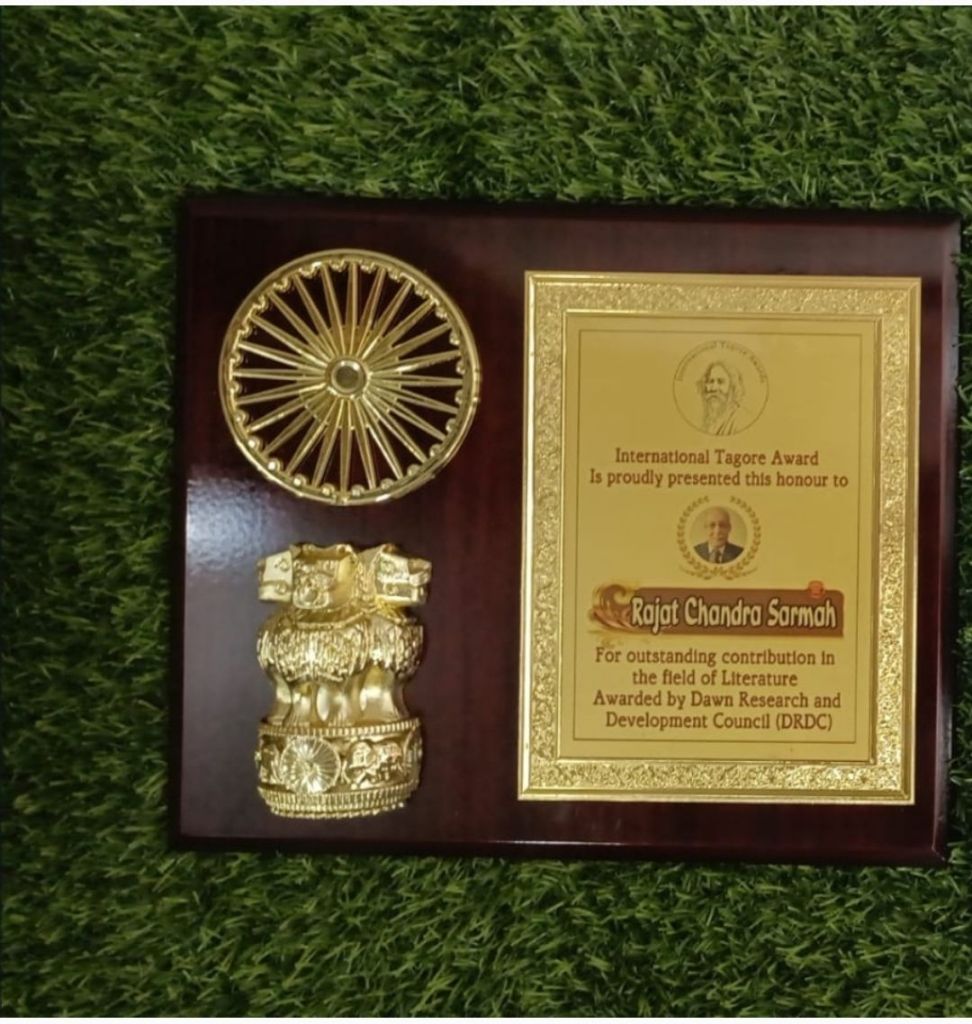
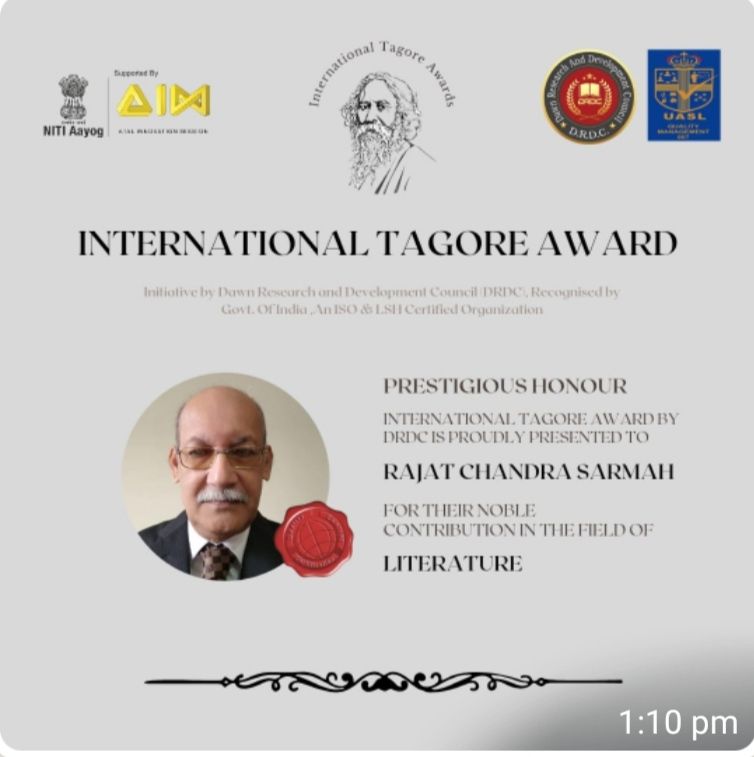
Recognisation for my book ANew Dawn Adventure in The Golden Years.

Rekindling Old Flames: Navigating the Streets of Nostalgia”(PART -II)

PARA-II

The challenge of negotiating with vendors unwilling to reduce their prices became a defining feature of this transformed marketplace. With each attempt to haggle, the vendors stood firm, their expressions unyielding as if their resolve mirrored the unrelenting march of time itself. The echoes of past transactions, where a friendly banter often resulted in a favourable deal, now seemed like distant melodies drowned out by the cacophony of rigid pricing structures.

A paradox unfolded as vendors were bound by a commitment to profit margins and fixed prices, and no reduction in prices was offered leading sometimes to discarded unsold rotten items to dusbin. Once teeming with life, the market’s alleys now bore witness to the wasteful aftermath of a commerce system that prioritized margin over sustainability. Piles of neglected produce and neglected meats, a stark contrast to the lively exchange of goods, spoke volumes about the challenges faced by both sellers and buyers in this evolving economic landscape.

The very essence of market dynamics seemed to be at odds with the fundamental principle of supply and demand. The disconnect between vendors unable to adjust their profit margins and customers grappling with the burden of inflated prices created an uneasy atmosphere, shrouding the once-thriving marketplace in a veil of economic tension.

As I observed this paradoxical dance of commerce, it became evident that the heartbeat of the main market was caught in a delicate rhythm—one that oscillated between the nostalgia of a bygone era and the harsh realities of a present where affordability became a rare luxury. The dichotomy of abundance coexisting with waste cast a poignant shadow on the very foundations of this market, urging reflection on the sustainability of a system where the pursuit of profit often overshadowed the essence of community and shared livelihoods.

Once, we used to visit this place even when we did not have to purchase anything, but for the vibrant ambience of this place, always like some festivity was going on. Had our evening snack, getting one or two vegetables, some groceries and some fish or meat. But we spent a lot of time here gossiping. There was a trailer shop almost at the entry to the market and the owner Santosh da, was soon become our friend. We never forget to visit his place when come to the market. He is an information treasure house and can talk about all the beautiful girls seen in this area or we are attracted. We all were bachelors then, and Santoshda is giving us all the leads to follow up. He was a respected person in the market community and we took advantage of his worldly pieces of information, sharing a single tea into three to four cups and gossiping goes on till we return to our house happily. I went to Santosh da’s shop to meet him . he is getting old but has the same lovely smile. He immediately recognised me, offered me a chair and sent his assistant to bring some tea for us. We went on gossiping and all the old happy moments were coming up taking me to the distant past. My pleasant experience dragged me today to this place after such a long time. so many happy moments that bring avalanches of nostalgia to my mind

As I continued my journey through the labyrinth of the main market, the noticeable changes in the last decade unfolded like chapters in a rapidly evolving story. The most striking transformation lay in the landscape itself, where the once-familiar market now stood overshadowed by the imposing rise of new concrete structures. These structures though become useful for an enlarged space but the original beauty of the place has gone. Their sleek facades seemed to symbolize the market’s evolution into a modern commercial hub, a far cry from the simpler times of open-air stalls and makeshift awnings. One vendor, who had been a fixture in the market for decades, shared her reflections on the changes. With a wistful gaze, she recounted the times when her stall was a familiar meeting point for neighbours. Now, amidst the sea of faces, recognizing familiar ones became a rare feat, and the sense of community that once defined the market seemed to dissolve in the crowd.

The mismatch between the population surge and the outdated infrastructure manifested in the strain on basic amenities. The narrow lanes that once accommodated strolls now resembled a bustling ant colony, with people jostling for space. The lack of proper waste management led to alleys littered with remnants of hurried transactions, a stark contrast to the meticulous cleanliness of the past.

The influx of these new structures not only altered the skyline but also brought with them an unintended consequence—the prevalence of dust. left an undeniable mark on the air, mechanising the human mind and transforming the once-fresh breeze into a gritty reminder of the market’s metamorphosis. The dust, like a silent witness, settled on the colourful produce and fresh catches, and the human mind, a visual testament to the clash between tradition and progress.

Amidst the dust and concrete, the heartbeat of the market persisted, but the rhythm had shifted. The air, laden with nostalgia and progress, hinted at a future where the market, rooted in history, was adapting to the demands of a changing world. The once-familiar alleys, now adorned with towering structures, reflect the resilience of a community determined to navigate the delicate balance between preservation and evolution.

As I meandered through the transformed labyrinth of the main market, my observations and feelings became an intricate part of the unfolding narrative. The nostalgia that had initially embraced me now mingled with a sense of bittersweet acceptance, as the market’s metamorphosis unveiled both its charms and challenges.

The vibrancy of the market, once a comforting constant, now bore the weight of change. The introduction of concrete structures and the surge in population had shifted the very dynamics that had shaped my memories. Amidst the hustle and bustle, I couldn’t help but reflect on the challenges faced by both buyers and sellers in this evolving environment.

What was once a leisurely visit now required strategic planning, with the search for a parking spot becoming a prelude to the actual shopping experience? The market, once a haven of convenience, now demanded a level of patience and persistence that tested the resolve of even the most dedicated patrons.

As the market pulsated with life, it became a reflection of the delicate dance between nostalgia and progress. The challenges faced by buyers and sellers were not just economic; they were cultural, social, and deeply intertwined with the identity of the community. The market, once a simple transactional space, had become a stage where the complexities of a changing world played out in vibrant hues, each interaction a brushstroke in the evolving portrait of the main market.

Amidst the dynamic backdrop of the main market’s transformation, a character emerged – Dona, a seasoned vendor known for her unwavering commitment to tradition. Clad in vibrant attire that mirrored the diversity of her goods, she stood at the heart of the market, her stall adorned with the colours of these places.

Dona’s story became a microcosm of the market’s evolution. Her wrinkled hands, weathered by years of tending to her stall, told tales of resilience, but her eyes reflected a quiet apprehension in the face of change. She embodied the bridge between the market’s past and its uncertain future.

Dona caught between the echoes of her heritage and the demands of the evolving market, faced a dilemma that mirrored the broader challenges. Would she stand firm, holding onto the traditions that had defined her stall for decades, or would she adapt, acknowledging the economic realities that threatened to erode the foundation of the old culture and tradition of the market itself?

The market, once a space of commerce, now became a battleground for ideals, a place where the very essence of identity hung in the balance.

As the economic disparities and infrastructure challenges clashed within the tapestry of the main market, conflicts surfaced like ripples in a once-calm pond. Dona’s stall, standing at the crossroads of tradition and progress, became the epicentre of the storm. Buyers, driven by the burden of high costs, confronted vendors, demanding a reevaluation of pricing structures. The narrow alleys echoed with passionate debates, emphasizing the urgent need for adaptation.

The infrastructure challenges compounded the turmoil. The once-charming lanes, now clogged with dust and crowds, strained under the weight of increased commercial activity. Parking remained a precious commodity, a symbol of the unpreparedness of the market to accommodate its growing popularity. The clashes of opinions and the visible strain on the market’s facilities created a tense atmosphere, challenging the very foundations of the community.

Dona, faced with the stark reality of economic disparities, found herself contemplating the delicate balance between preserving tradition and embracing change. The vendors, too, began acknowledging the necessity of adapting their pricing models to sustain the market’s vibrancy. Talks of infrastructural upgrades circulated, raising hopes of a more accommodating space for both buyers and sellers.

Proposals for infrastructure improvements gained traction, supported by the understanding that a modernized market could retain its cultural essence while meeting the demands of the contemporary world.

At the heart of this evolving narrative, the community found itself at a pivotal moment of reflection. The market, once a timeless hub, now stood at the threshold of transformation. What was at stake was not merely the affordability of goods or the availability of parking spaces; it was the preservation of a cultural legacy against the backdrop of progress.

The main market stood as a symbol of resilience and adaptation. The conflicts had laid bare the complexities of navigating change, and the community found itself at the cusp of defining a future that balanced heritage and modernity. The impact on the community was not just economic; it was a collective introspection that rippled through generations.

with a sense of anticipation, leaving room for further exploration and contemplation. The next part of the narrative held the promise of resolution, where the community, with its unique blend of tradition and adaptability, would shape the destiny of the main market. As the market’s journey continued, it beckoned the community to embark on a collective odyssey, navigating the ever-shifting landscapes of commerce, culture, and community.

( END)

††*******†****************†*************************

Rajat chandra sarmah

14/03/2024

Mail ID : rajatchandrasarmah@gmail.com

Rekindling Old Flames: Navigating the Streets of Nostalgia”(PART -I)

As I stepped into the vibrant chaos of the main marketplace after what felt like an eternity, a wave of nostalgia engulfed me, carrying me back to a time when this bustling marketplace was more than just a shopping destination—it was a sanctuary for the necessities that shaped our daily lives. The air, heavy with the scent of myriad spices, teased memories of yesteryears when every visit to this market was a journey woven with familiarity and tradition.

The panoramic view that unfolded before my eyes was a canvas of life. The market, adorned with its vibrant stalls and animated chatter, sprawled out in a kaleidoscope of colours. The fish section exuded the briny scent, foul to the some, where silvery catches lay in abundance, tempting the discerning buyer. Across the way, the mutton and pig stalls hinted at culinary delights waiting to be crafted, promising succulence that only the choicest cuts could offer.

Amidst this symphony of aromas, the vegetable market stood as a testament to the earth’s bounty, with an array of vibrant greens and colourful produce that seemed to whisper tales of fertile lands far beyond the market’s periphery. Above it all, the aroma of seasoned meats mingled with the earthy fragrance of fresh vegetables, creating a melange that defined the essence of this historic marketplace.

The main market, with its labyrinthine lanes and energetic vendors, held a historical significance that transcended the mundane transactional nature of commerce. It was the heartbeat of the community, the pulse of daily life, where the act of buying essentials transformed into a communal ritual that bound generations together. We, the friends, then bachelors, went from the office to a particular restaurant, run by a few very charming young ladies. They were the attraction, and evening, getting a seating place was difficult. From there we normally go to a fish vendor, an old lady with a pink cheek and white hair bundled in a nice bun. Surprisingly, she always wears very clean dresses and knows us very well. once we brought fish from a different vendor which she noticed, and she gave us some very good words, after that, we never tried purchasing fish other than from her ..she was like our grandma and always had a cute smiling face.

After coming to this place after so long, I stood there, absorbing the sights and sounds of the market. There were not many changes took place during these periods. I couldn’t help but marvel at the memories etched into the very fabric of these crowded alleys. Each stall seemed to have its own story, narrating the ebb and flow of life, the changing seasons, and the unyielding spirit of a community that had woven its existence around these humble marketplaces.

This was not merely a market; it was a living archive, a repository of shared histories and enduring connections. With each step, I embarked on a journey through time, traversing the market’s labyrinth to unearth the echoes of bygone days and rediscover the essence that had made the main market the quintessential go-to place for essentials.

the mutton and pig section, the air resonated with the rich, savoury aroma of seasoned meats, tempting passersby with promises of culinary delights. The origins of these succulent offerings could be traced back to the pastoral landscapes of Assam, where skilled hands raised livestock with care, ensuring only the finest cuts graced the market stalls.

Moving on, the beef and chicken section hummed with the rhythmic cadence of life, as vendors proudly displayed the fruits of their labor. These offerings, too, had made their way from the lush hills of Tripura, where cattle roamed freely, and flocks of chickens flourished under the open skies.

As I navigated through the lively tapestry of the main market, the sections for fish, mutton, pig, beef, chicken, and vegetables unfolded like chapters in a vivid story of sustenance. The fish market, adorned with glistening silver treasures from distant waters, echoed with the energetic calls of fishermen haggling over their prized catches. Each variety told a tale of the brackish rivers of Assam and the Ilish fish a favourite of the residents came from Tripura and Bangladesh, their origins painted in the scales that shimmered under the vibrant sunlight. I was looking for our grandma, and ultimately, I located her when she shouted at me. I was very happy to find her. Now she is not selling fish, her daughter is doing that job. but she supervises everything. After the meeting, she must also recollect, a lot of old stories and she goes on to speak, about how people have changed.No helpful attitudes, she summarised. She asked about me, and my family like a close friend wanting to know, I was so happy After talking to her, I went to our favourite restaurant. It was still not office closure time and, I got a seat. the same girls were there though they must have now married. One of them identified me said hello, and asked where I am nowadays. I told her that I was no longer in service and just come here to see my favourite place. She gave a meaningful smile.

However, amidst the symphony of commerce, the vegetable market stood as a local testament to the fertile lands surrounding localities. The vibrant hues of greens, reds, and yellows painted a picture of the region’s agricultural bounty, with farmers from the local areas contributing to the colourful mosaic. Unlike their meat counterparts, these vegetables didn’t embark on journeys from distant states; instead, they were a celebration of the fertile soil that sustained the local community.

What truly set the scene ablaze with vibrancy was the enchanting sight of the market being predominantly run by women and girls, their presence a mosaic of strength and grace. Their laughter echoed amidst the chaotic symphony of bargaining and banter, and their faces, adorned with the telltale signs of a traditional habit, painted a charming picture of cultural heritage.

The market’s heartbeat was the rhythmic crunch of betel nuts between their teeth. As these resilient women and girls tirelessly managed their stalls, their pink-cheeked smiles and lips stained a vibrant red told a tale of resilience, a symbol of their enduring spirit in the face of daily challenges. Amidst the hustle and bustle, the market emerged not just as a marketplace but as a living canvas, where the convergence of Assam, Tripura, and local traditions harmonized in a dance of commerce and culture.

Yet, amidst the vibrant charm of the main market, a shadow danced on the fringes of the lively scene—the high cost of goods. The once-affordable essentials now bore price tags that seemed to defy gravity, soaring to heights that tested the resilience of even the most seasoned buyers. Bargaining, once a spirited dance between buyer and seller, now resembled a tightrope walk on the edge of unyielding prices.

The challenge of negotiating with vendors unwilling to reduce their prices became a defining feature of this transformed marketplace. With each attempt to haggle, the vendors stood firm, their expressions unyielding as if their resolve mirrored the unrelenting march of time itself. The echoes of past transactions, where a friendly banter often resulted in a favourable deal, now seemed like distant melodies drowned out by the cacophony of rigid pricing structures.

Rajat chandra sarmah

8/3/24

Mail ID : rajatchandrasarmah@gmail.com

Meet Mr. Rajat Chandra author of the book New Dawn Adventure in the Gold…

https://youtube.com/live/58m2tLLonKI?si=uXJE45R2d20PYgJs

Subscribe to the blog

Good morning. Have a beautiful day.


Please follow my blog 

musingofrajat.wordpress.com

where I try to write my thoughts.

If you read and comment, it will greatly encourage me. Hope you will not hesitate.

So, Kindly Click the link below


https://musingofrajat.wordpress.com

go to  home


put your email ID.


click subscribe


check your mail for confirmation


click confirm at the bottom of the mail you received in your inbox for confirmation.

That’s all.

Thank you very much

Please share it with your friends/ colleagues/ relatives and everyone in your contact.

Rajat Chandra Sarmah.

Talking with Shalini about my Amazon Best selling No#1 book- A new dawn adventure in golden year

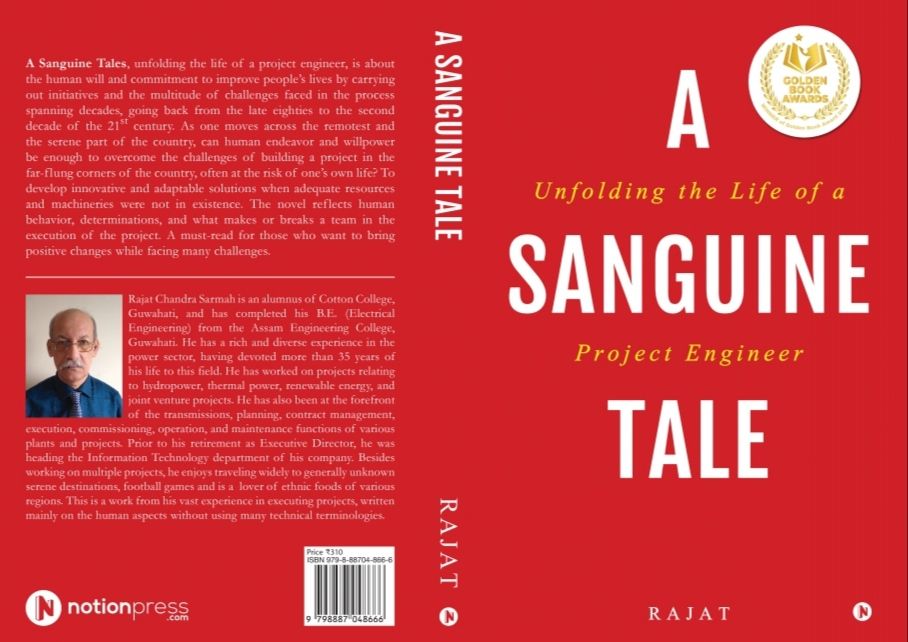
Golden Book Award LoGo is now affixed in my book