A Rock in the river : A new anthology published by Cloud of thoughts . Happy to be a part of it as co- author

A Rock in the river

A new anthology

“A Rock in the river“

published by Cloud of thoughts is released

I am a Co -Author in this anthology

Thank you Cloud of thoughts

Rajat Chandra Sarmah

Camp : Pilani  Rajasthan , India

28/01/25

Administrative System of Indonesia

( C) All rights reserved by the author.

Instagram:@rajatchandrasarmah5

Indonesia is a unitary state with a decentralized system of government. Its administrative structure is a combination of central authority and regional autonomy, allowing provinces and districts to manage their local affairs while remaining unified under the central government. Bali, as one of Indonesia’s provinces, follows this system but retains its unique cultural identity.

Government Structure

Indonesia follows a presidential system of government, with three main branches: the Executive, Legislative, and Judiciary.

1. Executive Branch

  • The President is both the Head of State and Government, elected for a five-year term and eligible for one re-election.
  • The President appoints a Vice President and the Council of Ministers to oversee specific portfolios, including defense, education, and health.
  • The Governors head the provinces, while Regents (Bupati) or Mayors (Walikota) govern districts and cities.

Bali’s Governance

  • Bali operates as a province within Indonesia. It is headed by a Governor, who works closely with district heads (Bupati) and village leaders to manage the island’s administration, tourism, and cultural preservation.
  • Traditional Balinese villages also have their own governance system called Desa Adat, which works parallel to the official administrative structure to maintain cultural practices and temple management.

Legislative System

Indonesia has a bicameral legislative system, consisting of:

  1. People’s Consultative Assembly (Majelis Permusyawaratan Rakyat – MPR): The highest legislative body, responsible for amending the Constitution and inaugurating the President and Vice President.
    • Composed of two chambers:
      • House of Representatives (Dewan Perwakilan Rakyat – DPR): Responsible for drafting laws and overseeing the government.
      • Regional Representative Council (Dewan Perwakilan Daerah – DPD): Represents the provinces and focuses on regional issues.

Bali has its own representatives in both the DPR and DPD, ensuring its voice is heard in national decision-making.

Judiciary

The judiciary in Indonesia is independent, based on the principles of Pancasila (the state ideology) and the Constitution. It has several tiers to handle various legal matters.

Key Judicial Bodies:

  1. Supreme Court (Mahkamah Agung): The highest court in the country, dealing with appeals and ensuring uniformity in legal interpretation.
  2. Constitutional Court (Mahkamah Konstitusi): Handles constitutional matters, including disputes over elections and reviewing laws.
  3. Judicial Commission (Komisi Yudisial): Supervises judicial conduct and ensures integrity within the judiciary.

Customary courts in Bali, known as Desa Adat Courts, handle local disputes based on traditional Balinese laws, often involving community or religious matters.

Election System

Indonesia practices a direct electoral system, with elections held every five years for national and regional leadership.

Presidential Elections

  • The President and Vice President are elected directly by the people through a majority vote system (50%+1 of total votes, with at least 20% of votes in half of the provinces).
  • Presidential candidates must have political party support or an independent nomination with sufficient signatures.

Legislative Elections

  • Members of the DPR and DPD are elected via a proportional representation system, where voters cast ballots for political parties and individual candidates.
  • Regional legislatures at the provincial (DPRD) and district levels are also elected similarly.

Local Elections (Pilkada)

  • Governors, Regents, and Mayors are elected directly by the people in their respective regions.
  • In Bali, local elections are highly influenced by cultural and religious considerations, with leaders expected to protect the island’s traditions.

Decentralization and Regional Autonomy

Following the Reformasi (Reformation Era) after the fall of Suharto in 1998, Indonesia embraced regional autonomy to empower local governments. Provinces like Bali gained more control over areas such as education, healthcare, and tourism, while the central government retains authority over defense, foreign affairs, and monetary policy.

This system enables Bali to manage its tourism-driven economy effectively, while preserving its cultural heritage through traditional governance systems like the Desa Adat.

Challenges in Governance

Indonesia’s administrative and electoral systems face challenges such as:

  1. Corruption: Efforts are ongoing to combat corruption in government and judiciary through the Corruption Eradication Commission (KPK).
  2. Ethnic and Regional Disparities: Balancing development across islands while respecting their unique identities.
  3. Environmental Concerns: In Bali, governance often grapples with balancing tourism growth and ecological preservation.

Conclusion

Indonesia’s administrative system reflects a delicate balance between central authority and regional autonomy, embracing its diversity while fostering unity. Bali, as a vibrant part of this archipelago, thrives under this structure, blending traditional governance with modern administration. The country’s robust electoral system and independent judiciary further reinforce its democratic foundation, despite the challenges of managing such a vast and diverse nation.

NOTE :Data provided here is for reference purposes only as they are collected from tourist guidance , google etc .

RAJAT CHANDRA SARMAH

CAMP :PILANI , RAJASTHAN

27/02025

Few more beautiful moments

Bali Diary: Day 5

( c) ALL RIGHTS RESERVED BY THE AUTHOR

Instagram : @rajatchandrasarmah5

After four days of immersive exploration, we dedicated today to relaxation and celebration, marking our wedding anniversary in the serene ambiance of Seminyak.

Morning: Leisurely Start and Swimming

Embracing the luxury of The Bali Dream Villa Seminyak, we indulged in a restful sleep, waking up refreshed. The villa’s private pool, surrounded by lush tropical gardens, provided the perfect setting for a morning swim. The tranquility of the surroundings enhanced our relaxation, allowing us to fully unwind.

Late Morning: Beach Stroll

Post-swim, we decided to visit Seminyak Beach, located approximately 1.2 miles from our villa. The soft sands and gentle waves offered a peaceful environment for a leisurely walk. The beach’s expansive shoreline, lined with vibrant cafes and boutiques, showcased the blend of natural beauty and modern charm that Seminyak is known for.

Afternoon: Lunch and Spa Indulgence

For lunch, we explored a local café, savoring Balinese cuisine that tantalized our taste buds. Post-lunch, we treated ourselves to a traditional Balinese massage at a nearby spa. The therapeutic techniques, combined with aromatic oils, melted away any residual travel fatigue, leaving us rejuvenated.

Evening: Anniversary Dinner at Spice Mantraa

To celebrate our anniversary, we reserved a table at Spice Mantraa in Seminyak. This contemporary Indian restaurant is renowned for its innovative take on classic dishes, offering a delectable twist to traditional flavors. The culinary team, comprising six ambitious and creative chefs from various regions of India, reimagines the classics using molecular gastronomy and avant-garde techniques to create dishes with complexity and flair.

The ambiance was sophisticated yet inviting, and the staff’s warm hospitality made the evening special. Each dish was a masterpiece, blending spices harmoniously to create a memorable dining experience.

Night: Return to Villa

After dinner, we returned to The Bali Dream Villa Seminyak, reflecting on the day’s serene moments and the joyous celebration of our anniversary. The villa’s serene ambiance provided the perfect backdrop for a restful night’s sleep, as we prepared for our journey back to Delhi the following day.

This day of relaxation and celebration was a fitting conclusion to our Balinese adventure, leaving us with cherished memories to carry home.

Rajat Chandra Sarmah 

Camp , New Delhi, India

26/01/2025

Some more pictures of Bali

Last few days with nature

Indonesia and Bali: A Glimpse into Their Rich Cultural and Human Aspects

( C) All rights reserved by the author .

Instagram :@rajatchandrasarmah5

As the data mentioned here are either from travel guide ,google , wikipedia  etc , the author does not claim the data is error – free and only for reference purposes .  Therefore be rechecked with authentic source considered for

Indonesia, a sprawling archipelago of over 17,000 islands, is a tapestry of diverse cultures, traditions, and religions. Bali, one of its most famous islands, stands as a vibrant microcosm of Indonesia’s rich heritage. Together, they offer an enchanting blend of rituals, food habits, and human connections that are both ancient and evolving.

Rituals and Customs

Indonesia’s cultural fabric is deeply woven with rituals and customs that reflect its ethnic and religious diversity. With over 300 ethnic groups, each has its unique practices. In Bali, Hinduism dominates, and rituals like Nyepi (Day of Silence) and daily offerings of canang sari (small floral offerings) are integral to life. Temples across Bali host colorful festivals like Galungan and Kuningan, symbolizing the victory of dharma over adharma.

Traditional dances like the Kecak Dance, shadow puppet performances (wayang kulit), and ceremonies tied to life events such as birth, marriage, and death also play a central role. Across Indonesia, Islamic practices dominate, especially during Ramadan, while Christian and Buddhist communities add to the nation’s spiritual mosaic.

Food Habits

Indonesia’s culinary landscape mirrors its diversity. Rice (nasi) is a staple, often paired with a variety of side dishes, sambals, and curries. Popular dishes like nasi goreng (fried rice), satay (grilled meat skewers), and gado-gado (vegetable salad with peanut sauce) showcase a mix of spices and techniques influenced by Indian, Chinese, and Middle Eastern cuisines.

In Bali, traditional dishes like babi guling (suckling pig) and lawar (minced meat salad) are common, often tied to temple offerings. Fresh seafood is also a highlight, especially in coastal areas like Jimbaran. Coconut, spices, and herbs dominate the Balinese palate, making every meal a sensory delight.

Religion and Caste

Indonesia is the world’s largest Muslim-majority country, yet it embraces religious pluralism. Hinduism thrives in Bali, while Christianity, Buddhism, and indigenous beliefs coexist in harmony. The Balinese caste system, although less rigid than in India, still influences social and religious roles. It categorizes people into Brahmana (priests), Ksatria (warriors), Wesia (merchants), and Sudra (commoners). Despite modernization, these structures subtly guide daily life and rituals.

Connectivity to Various Islands

As an archipelago, Indonesia relies heavily on its maritime connections. Traditional phinisi ships and modern ferries link the islands, while air travel has become increasingly important. Bali’s Ngurah Rai International Airport serves as a gateway for both tourists and Indonesians traveling across the nation. The connections extend beyond transport—cultural and trade exchanges between islands have shaped Indonesia’s collective identity.

Industries and Economy

Indonesia’s economy thrives on a mix of traditional and modern industries. Bali, renowned for its tourism industry, contributes significantly to the nation’s GDP. The island’s unique culture, pristine beaches, and luxury resorts attract millions of visitors annually. Beyond tourism, agriculture, especially rice and coffee cultivation, sustains rural livelihoods.

Nationally, Indonesia is rich in natural resources, exporting coal, palm oil, and natural gas. The fishing industry, handicrafts, and textiles also play crucial roles in the economy. Traditional arts, such as batik-making and wood carving, are not only cultural treasures but also sources of income.

Human Connectivity and Cultural Harmony

Despite its diversity, Indonesia thrives on its sense of unity, encapsulated in the national motto, “Bhinneka Tunggal Ika” (Unity in Diversity). Festivals like Independence Day bring people together, transcending ethnic and religious boundaries. In Bali, the concept of Tri Hita Karana, which emphasizes harmony among humans, nature, and the divine, reflects the islanders’ way of life.

Conclusion

Indonesia and Bali are living examples of how diversity can coexist with unity. Their rituals, cuisines, religions, and industries paint a vivid picture of human adaptability and resilience. Whether it’s the serene prayers at a Balinese temple, the bustling streets of Jakarta, or the tranquil beaches of Komodo, Indonesia offers a journey through the soul of humanity(To be continued)

Rajat Chandra Sarmah

Camp :Delhi , India

25/01/2025

Bali Diary: Day-4

( C )All rights reserved by the author

Instagram :@rajatchandrasarmah5

Today marked a delightful blend of cultural immersion, scenic beauty, and a touch of luxury as we transitioned to a new abode in Bali.

Morning: Transition to The Bali Dream Villa Seminyak

We bid farewell to the Risata Bali Resort & Spa, our home for the past few days, and made our way to The Bali Dream Villa Seminyak. Nestled in the heart of Seminyak, this resort offers 30 luxurious private pool villas adorned with beautiful Balinese decorative ornaments, all surrounded by a lush garden environment. The villa’s serene ambiance provided the perfect setting for relaxation.

Mid-Morning: Exploring Balinese Crafts

Eager to delve into Bali’s rich artisanal heritage, we visited local markets renowned for their exquisite silver jewelry and traditional masks. The intricate designs of the silver pieces showcased the craftsmanship passed down through generations. The traditional Balinese masks, each telling a unique story, were captivating. These masks, often used in ceremonial dances, are not only artistic expressions but also hold cultural significance.

Noon: Savoring Balinese Coffee

Our exploration led us to a quaint coffee plantation where we were introduced to the world of Balinese coffee. We learned about the traditional methods of coffee production and had the opportunity to sample various blends, including the famed Kopi Luwak. The rich aroma and unique flavors were a treat to the senses.

Lunch: Dining with a View of Mount Batur

For lunch, we chose a restaurant offering panoramic views of Mount Batur. The sight of the majestic volcano, with its caldera and the serene Lake Batur at its base, was mesmerizing. The tranquility of the setting, combined with delicious local cuisine, made for an unforgettable dining experience.

Afternoon: Relaxation at the Villa

After a day of exploration, we returned to The Bali Dream Villa Seminyak to unwind. The private pool provided a refreshing escape, and the villa’s amenities ensured utmost comfort. The blend of traditional Balinese architecture with modern conveniences made it a perfect retreat.

As the day drew to a close, we reflected on the diverse experiences Bali offers—from its rich cultural tapestry to its breathtaking natural beauty. We look forward to the adventures that await us in the coming days.( To be Continued)

RAJAT CHANDRA SARMAH 

CAMP ;BALI , INDONESIA

24/01/2025

BALI DIARY:

Indonesia and Bali: A Comprehensive:

An overview :

( C )ALL RIGHTS RESERVED BY THE AUTHOR

Instagram : @rajatchandrasarmah5

Overview

Geographical and Demographic Context

Indonesia, an expansive archipelago in Southeast Asia, comprises over 17,000 islands, with Bali being one of its most renowned. Covering approximately 5,780 square kilometers, Bali represents a mere 0.3% of Indonesia’s total landmass. Despite its modest size, Bali is home to about 4.3 million people, accounting for 1.4% of the nation’s population.

Livelihoods and Economic Activities

Traditionally, agriculture has been the backbone of Bali’s economy, with many locals engaged in rice cultivation, fishing, trading, and craftsmanship. In recent decades, tourism has surged to the forefront, becoming a pivotal source of income. As of 2018, it was estimated that around 50% of the island’s population was involved in or reliant on tourism-related activities.

Architectural Heritage

Bali’s architecture is a harmonious blend of tradition and nature. Traditional Balinese houses and gates often feature materials such as bamboo, thatch, and stone, reflecting a deep connection to the environment. Design elements emphasize axis symmetry and integration with the surrounding landscape, embodying sacred religious ideals.

Tourism: The Lifeblood of Bali

Tourism has been instrumental in Bali’s development. The island’s allure—stemming from its rich culture, stunning landscapes, and warm hospitality—has attracted millions of visitors annually. In 2019, Bali welcomed six million international tourists, underscoring its status as Indonesia’s premier tourist destination.

Indonesia’s Ascendancy in Global Politics

On the global stage, Indonesia has emerged as a significant player. As the world’s third-largest democracy and the tenth-largest economy by purchasing power, it wields considerable influence. Indonesia’s foreign policy is characterized by a commitment to democracy and a desire for autonomy, often navigating a middle path between major powers. Its active participation in international forums, such as the Association of Southeast Asian Nations (ASEAN), underscores its role in regional stability and global diplomacy.

Historical Context

Indonesia’s journey from colonial rule to independence in 1945 has shaped its national identity and foreign policy. The nation’s emphasis on “independent and active” diplomacy reflects its historical experiences and aspirations for sovereignty and regional leadership.

Conclusion

Bali, while a small part of Indonesia’s vast archipelago, plays a significant role in the nation’s cultural and economic landscape. Its unique blend of traditional livelihoods, architectural heritage, and booming tourism industry offers a microcosmic glimpse into Indonesia’s rich diversity and dynamic growth. Concurrently, Indonesia’s rising prominence in global politics highlights its strategic importance and evolving role on the world stage. ( To be Continued )

All data are taken from Google , tourist information S brochures etc .

Rajat Chandra Sarmah

Camp : Bali , Indonesia

24/01/2025

Bali Diaries: Day 3 – Temples, Gates, and Ocean Views

( C ) All right reserved by the author

Instagram :@rajatchandrasarmah5

The third day of our Bali adventure promised a blend of spirituality, culture, and scenic beauty. After breakfast, we embarked on a journey to some of the island’s most iconic landmarks, eager to embrace all that Bali had to offer.

Ulun Danu Bratan Temple: Serenity by the Lake

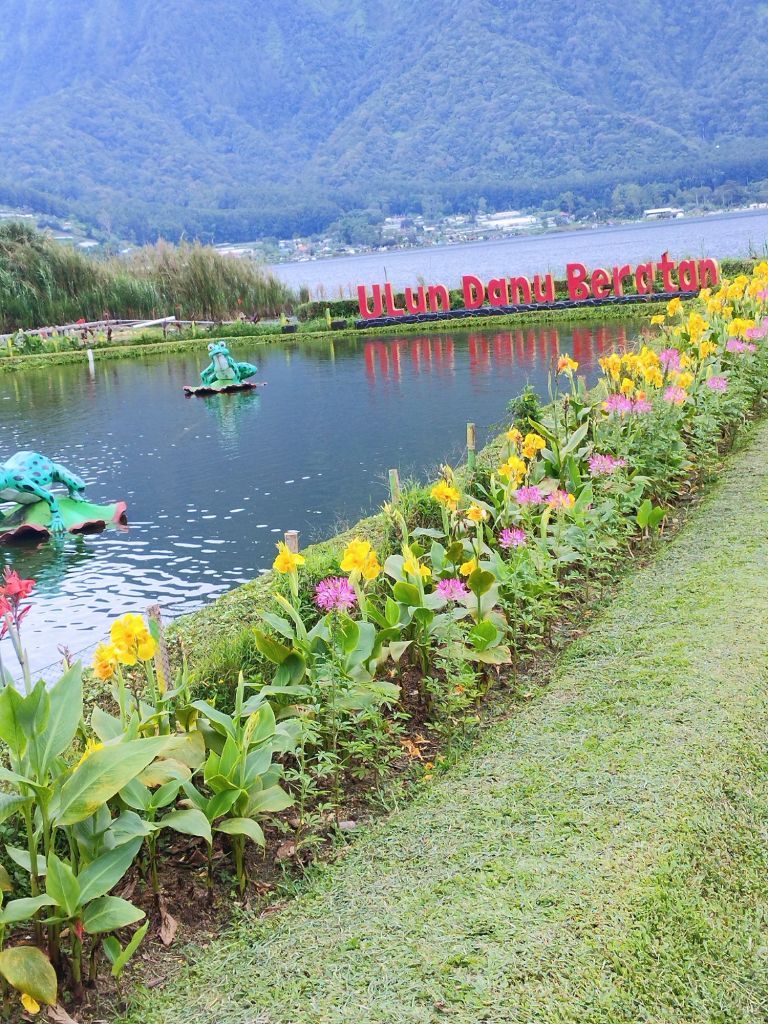
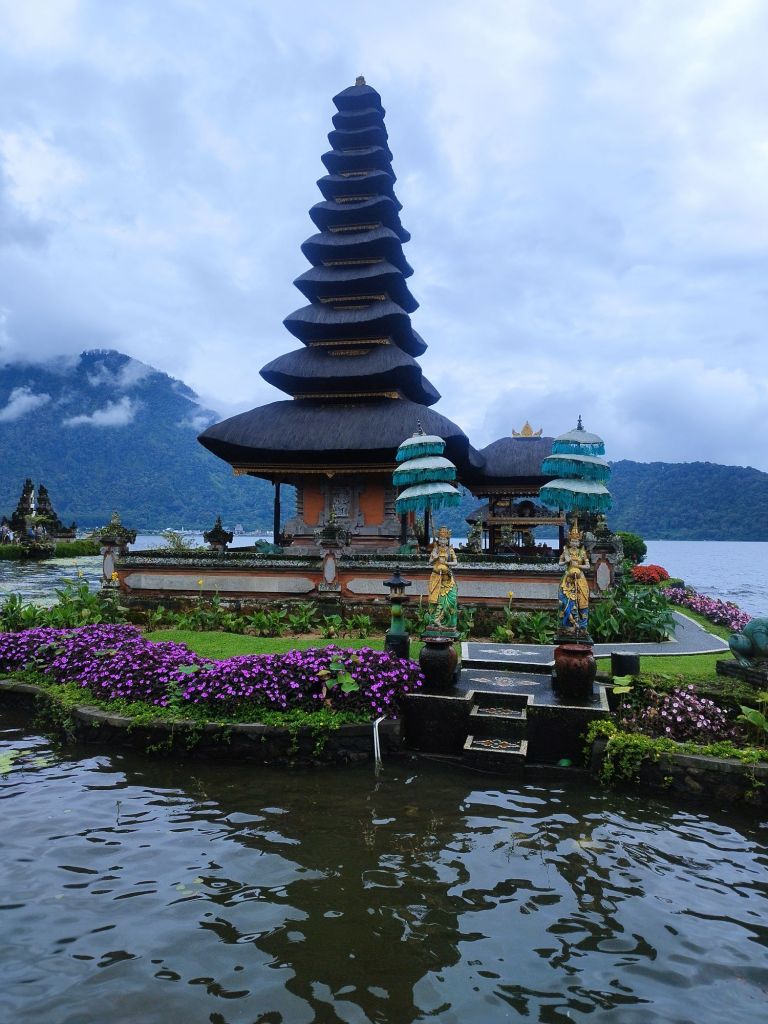
Our first stop was the magnificent Ulun Danu Bratan Temple, situated on the serene shores of Lake Bratan. As we approached, the temple appeared to float on the water, its reflection shimmering in the lake’s calm surface. Surrounding the temple were beautifully landscaped gardens bursting with vibrant flowers—frangipanis, hibiscus, and bougainvillea in a riot of colors. Tall trees swayed gently in the cool mountain breeze, adding to the temple’s tranquil aura.

My wife stopped to admire the statues that dotted the temple grounds, each intricately carved and full of character. “Look at this one,” she pointed, captivated by a statue of Dewi Danu, the water goddess. “Such detail! It’s incredible how they bring these figures to life.”

The temple was bustling with visitors, yet the air of peace remained unbroken. People patiently waited in long lines for their turn to pose by the floating temple. Professional photographers buzzed around, clicking away with precision.

“Why don’t we hire a photographer too?” my wife suggested.

“Sure!” I nodded. “This place deserves to be captured professionally.”

As we posed for our family photograph, the photographer’s energy was infectious, guiding us into the perfect frame. My son, however, was more interested in capturing his own shots, zooming in on the colorful flowers and the temple’s ornate architecture.

Handara Gate: A Majestic Welcome

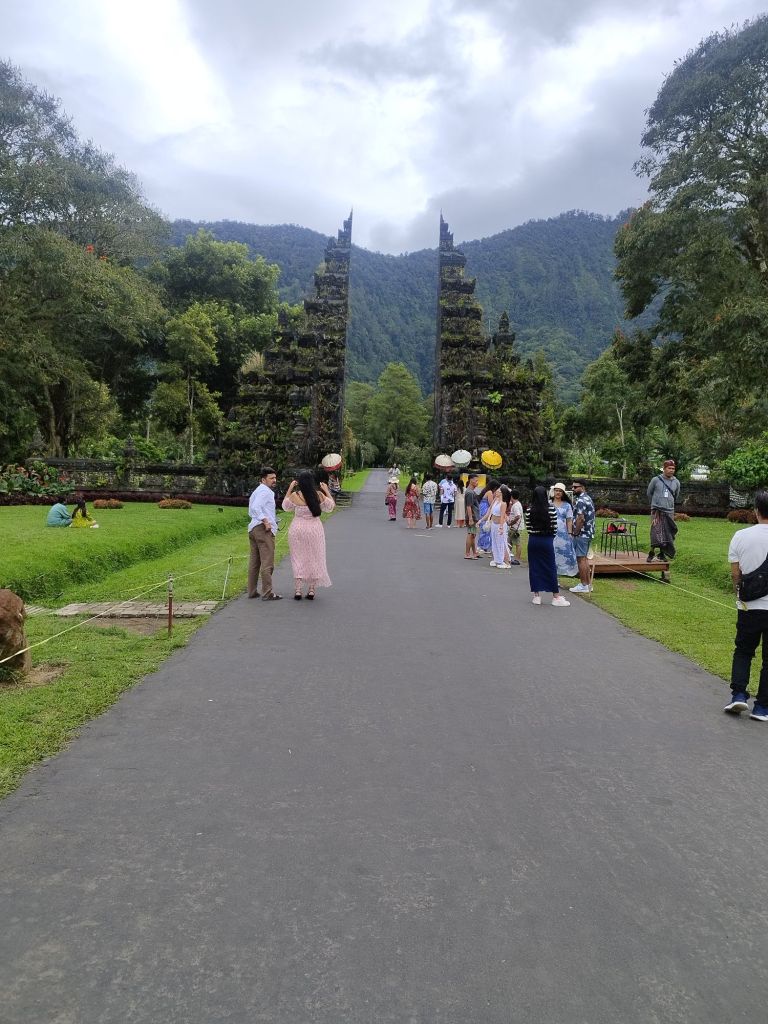
Our next destination was the Handara Gate, a towering Balinese gate surrounded by lush greenery. It felt like stepping into another world as we approached. The gate’s striking symmetry and the misty mountains in the background made it an irresistible photo spot.

Tourists were lining up for their turn, but the wait was worth it. When our turn came, we posed beneath the gate with wide smiles. My son’s excitement bubbled over as he explored the area, finding new angles for his photographs.

“This feels so surreal,” he said, snapping away. “It’s like we’re part of a painting.”

Luhur Lempuyang Temple: A Gateway to Heaven

Our journey continued to the Luhur Lempuyang Temple, famously known as the “Gateway to Heaven.” The split gate offered a breathtaking view of Mount Agung, framed perfectly on clear days.

But this stop came with a challenge—the steep climb. My wife, due to her knee pain, decided to sit this one out and waited at the base. She found a shaded spot to relax, chatting with locals and soaking in the temple’s spiritual ambiance.

“It’s okay,” she said with a smile. “You two go ahead and tell me all about it.”

Climbing to the top was no easy feat, but the reward was unparalleled. The panoramic views were awe-inspiring, and the majestic gate was everything we had imagined. My son and I stood in awe, taking in the sight of the clouds swirling around Mount Agung in the distance.

“This is definitely worth the climb,” I said, catching my breath.

Tanah Lot Temple: Sunset by the Sea

The day concluded at the Tanah Lot Temple, perched dramatically on a rocky outcrop by the sea. The waves crashed against the rocks, creating a natural symphony that added to the temple’s mystical allure.

As the sun began its descent, the sky transformed into a masterpiece of oranges and purples. We found a comfortable spot on the beach to take in the scene. My son wandered off to the water’s edge to capture the perfect sunset shot, while my wife and I sat hand in hand, absorbing the beauty around us.

“This sunset is magical,” my wife whispered. “I’ll never forget this moment.”

Neither would I. It was the perfect way to end a day filled with wonder and discovery.

Reflections on the Day

Driving back to our hotel, we shared our thoughts about the day. From the serene beauty of Ulun Danu Bratan to the majestic views at Luhur Lempuyang, and the enchanting sunset at Tanah Lot, the day had been nothing short of extraordinary.

“This trip is more than just a vacation,” I said. “It’s a journey that feeds the soul.”

With memories etched in our hearts and photographs to cherish forever, we returned to our rooms, ready to rest and dream of the adventures to come.( To be Continued)

Rajat Chandra Sarmah

Camp : Bali , Indonesia

23/01/2023